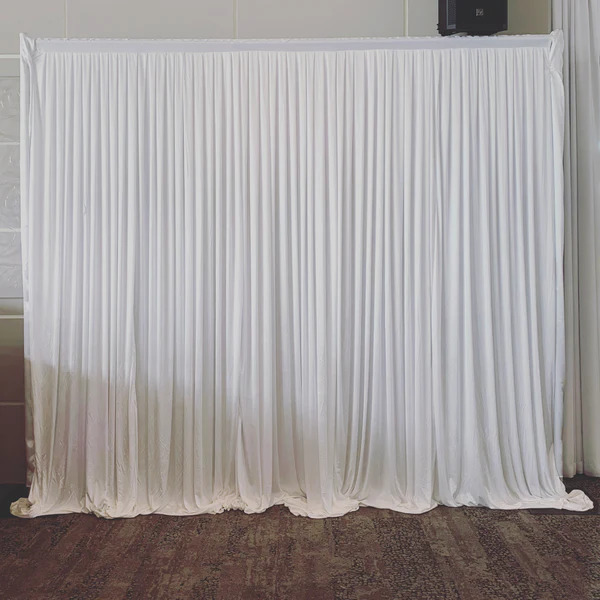
I’m thinking about getting backdrop for a small home portrait studio. Leaving out the issues of material vs. Paper, I’d like to understand how the one of a kind cloth alternatives evaluate. There’s muslin, velour (velour!), and canvas, and numerous natural and synthetic substances — cotton, polyester, hemp….I anticipate those substances have blessings and downsides, however backdrop garden it is all complicated to me. I’m looking for something very simple to be pure black and pure white, but I’d want to understand the differences, adventages, and drawbacks of these substances in standard.
You might need to keep in mind that I’ve been out of the seasoned recreation for a while, and that I tend to shoot people “in the wild” these days, so I’m not entirely updated at the modern-day services. I turned into simply hoping to peer a few other enter right here from human beings who’ve more latest enjoy in a expert studio surroundings, but right here goes:
Canvas
Canvas is extraordinarily long lasting, but it is now not especially portable or storable. As a painted fabric, it’s nicely-appropriate for floor cleansing (wiping with a fabric or sponge); as a dyed material you need to allow for light colorings to grow to be quite dingier over the years and for darks to vanish — dry cleaning, in preference to laundering, facilitates, as does dark garage in a sealed bag. White isn’t very white unless the canvas is painted (bleaching best receives you thus far), so you want area to light the background one by one if you want something it is reputedly white. (We’ll take it as examine that in case you want “digitally white”, you want to overexpose any history.)
Canvas may be pretty heavy; even the lighter grades of cotton duck sold as “canvas” are in the 10-12oz. Place and painted finishes add significantly to that, so you need a robust assist (now not necessarily a licensed and accepted official heritage stand set, but a couple of thumbtacks aren’t going to do it). It takes and suggests wrinkles and creases, even though they may relax into close to invisibility over the years if the canvas is dyed and unsized (and can be ironed out). Painted canvas really needs to be dealt with like roll paper; the binder in the paint (despite the fact that there is no seen paint movie) makes creases and wrinkles very distinguished. It’s superb stuff for swappable scenics or a durable seamless, but they really want to be stored either hung or rolled (and might take days of putting to become usable in the event that they have been folded, even round a shape, whilst you got them).Synthetics may also have modified the sport a piece given that I ultimate seemed; I can believe that something other than dropcloth-grade cotton duck (which became the bottom material for all of the lighter canvasses I’ve labored with) is probably truly higher-behaved, however I haven’t seen any proof of them in my neighborhood pro picture emporia.
Muslin
I don’t know what the kids are doing with muslin these days, but in my day it was the region opportunity to mottled canvas backdrops. Not only is muslin much lighter and barely less expensive, it takes wrinkles higher. Yep, that became the point. Getting canvas to a area intended either bringing an unwieldy long roll of material with you, folding it smartly and having a regular sample of creases (which look like a horrific web web page history photograph), or having a totally distinguished spider web of abnormal creases. Canvas is a heavy material; it handiest scrunches up a lot. Muslin, however, could be very lightweight and glories in the potential to take an almost fractal abnormal creased texture in case you just sort of scrunch it up and stuff it into a bag. When that texture is combined with the soft mottling that is normally applied, it just kind of disappears. If you need a undeniable background, you then need to treat muslin with nearly the same care as canvas.
Muslins do have a tendency to be crafted from a better grade of thread than canvasses (the supply looms and threads are used for things like mattress linens rather than commercial applications and grounds for portray on whilst they are not doing their twenty minutes a 12 months of photographic applications). That means that the outcomes of bleaching and loss of life tend to be higher — you may get a terrific white and intense, vibrant colorations without painting, in addition to darks with no sheen. But wrinkling and creases are usually going to be a trouble in case you want to store or move them.
Jersey (Knits)
Jerseys generally tend to get across the wrinkling and creaing trouble very neatly, and because of that they make exquisite solid-colour backgrounds. Being fabric, of direction they may be going to wrinkle and crease, however those wrinkles and creases may be stretched out without problems. But like the guy stated, there ain’t no such factor as a unfastened lunch.
Jersey’s do not simply grasp there; they pretty tons need to be stretched. If you put a undeniable jersey history panel on a general heritage stand, the top may be the marketed width, but it’s going to taper all the way down to this little six-inch huge cylinder at the lowest. You need to clamp the cloth to the uprights in oder to hold width, and the clamps need to be frequent enough to keep away from developing a seen diamond pattern because of versions inside the anxiety. And it is quite a lot a background-most effective material; it does not do nicely as a unbroken, even in case you try and stretch and weight the perimeter of the piece at the floor/table. (The stretchiness means that there’s nearly continually a bubble popping up somewhere.) It makes a extremely good pop-up, though, and it works notable on a body — wrinkles just vanish.
And there may be the pilling hassle. If you never need to smooth the material, it is able to live looking new for a completely long term. If you do need to clean it, you want to remember that you’re handling some thing it’s certainly simply an outsized tee shirt. Washing it by way of hand in bloodless water within the bath by squeezing (no agitation) and hanging to dry works well, but whatever rougher than a good way to quite tons destroy it. If it is some thing that going to experience quite a few hard-and-tumble, it’s the wrong material.
Velour/Velvet
These make extremely good stable shades (assuming we are now not talking about the “overwhelmed” variety) and there’s no replacement for black velvet as an absolute black other than vast distance — mild is going in and it doesn’t come returned out. The nap hides wrinkles and creases inside the base cloth thoroughly. For lighter/brighter hues, you could want to sweep the floor of the nap so that it will avoid apparent coloration adjustments (one of these massive blackboard erasers it is essentially a foam rubber block with a stick inner of it and a chamois glued over one face could be very brief and effective for this). Velvet/velour is terrific for solid whites, stable absolute blacks, and for chromakey-type hues, and a white or grey panel blended with gelled lights can make for terribly clean gradients. Velvets may be exceedingly mild (even though a few, made as coating fabric — that is, cloth suitable in weight for use for coats — and people primarily based on a jersey knit as opposed to a weave, may be fantastically heavy).
Velvets and velours, though, are lint magnets, and the lighter hues can pick up managing filth quickly. They are really now not appropriate for seamless applications in which whatever heavy (like someone or maybe a big tabletop subject) is concerned — elevating the nap again after it has been thoroughly crushed is a bear of a job.
There’s a massive variety of washability — the call truly only tells you what the surface of the fabric seems like; it would not tell you lots about the underlying production. Some will cross bald if you take a look at them humorous, a few will felt, others will chuckle at your “hot” water and puny washing machines. Some will dry quick and effortlessly, others will absorb Lake Superior in a unmarried gulp and be prepared to apply again subsequent February in case you’re lucky. It’s likely secure to count on that any employer that relies upon at the goodwill of expert photographers (Lastolite, Photek, Photoflex, Westcott, and so on) will promote you something appropriate for the reason; but as with whatever else in lifestyles, I’d be wary of anything priced at the “too suitable to be true” stage — it can work properly out of the field, but it is in all likelihood disposable.
 backdrop
Leave a comment